
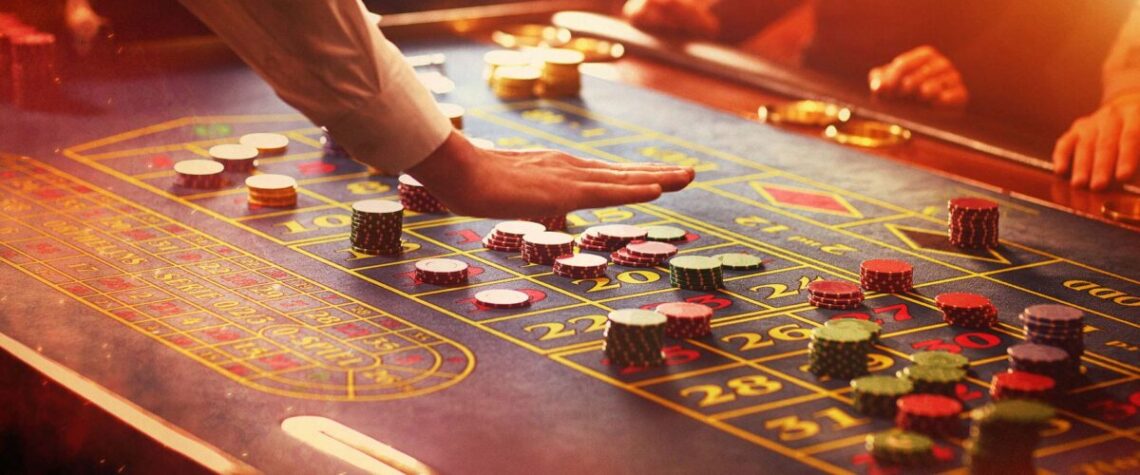
In a traditional casino, a dealer shuffles cards, spins a roulette wheel, or rolls dice to produce an outcome. Online casino games cannot rely on the same physical process for every digital round. Instead, many use a random number generator, commonly known as an RNG, to determine game results.
An RNG is a mathematical or computational system designed to produce values that meet defined randomness requirements. The game software uses those values to select outcomes, such as a card, a slot symbol, or a roulette result.
This technology allows digital games to run without a physical deck or wheel in every round. But randomness alone is not enough to establish fairness. The system must be implemented correctly, tested appropriately, and monitored under the requirements that apply to the operator.
What Is a Random Number Generator?
A random number generator produces a sequence of values used by software or hardware. In online casino games, those values are mapped to possible game outcomes according to the game’s rules.
For example, a digital card game needs a method for selecting cards and handling the order of the deck. A slot game needs a process for selecting symbols or other game elements. The RNG supplies values that the software uses to determine these outcomes.
Many digital systems use a pseudorandom number generator (PRNG). A PRNG uses an algorithm and an initial internal state, often called a seed, to generate a sequence that appears random and can be statistically tested. Cryptographically secure systems are designed to make future outputs difficult to predict without the relevant internal information.
The exact requirements depend on the game, the technology, and the jurisdiction. Not every generator is suitable for every use.
How RNGs Replaced Physical Shuffling in Digital Games
Physical shuffling works by changing the order of cards through a mechanical process. In a digital card game, software must create a valid sequence that follows the game’s rules without relying on a physical deck.
An RNG can supply values that are used to select and arrange virtual cards. The software then presents the result through the interface. Similar processes can power digital dice, roulette simulations, and slot games.
This approach offers several practical advantages. Games can run quickly, outcomes can be recorded automatically, and developers can create different game formats without building a physical mechanism for each one.
However, a virtual shuffle is not automatically fair just because it uses numbers. The algorithm, implementation, and mapping between random values and game outcomes must all behave as intended.
Randomness, Probability, and Return to Player
Randomness is closely connected to probability, but the two concepts are not identical.
Probability describes the chance of a particular outcome under a defined set of rules. Randomness concerns how outcomes are generated and whether the process meets the required properties.
Return to player (RTP) is another important concept. It represents the theoretical proportion of stakes that a game is designed to return to players over a very large number of plays, according to its mathematical model. A game with a theoretical RTP of 96%, for example, is not promising that every player will receive $96 back for every $100 wagered.
Individual results can vary widely. A player may win more or less than the theoretical return over a short session, and random outcomes do not guarantee a particular result in the next round.
A properly implemented RNG should not be adjusted to produce a predetermined outcome for an individual player. The game rules and mathematical design determine how valid random values translate into results.
How Regulators Test RNG Fairness
Regulators may require independent testing before online games are released. In Great Britain, the Gambling Commission’s testing framework requires relevant licensees to use approved test houses for applicable game and RNG testing. The review can include RNG documentation, source-code checks, statistical analysis, and verification of how random values are converted into game outcomes. <Cite refs={[“turn604922search0″,”turn604922search3”]} />
Testing is intended to establish whether a system meets the required technical standards. It may examine whether the generator has known weaknesses, whether outputs behave as expected statistically, and whether the game software implements the documented rules correctly.
The scope of testing varies by product and regulatory framework. Some systems require more extensive independent assurance than others, and changes to a game or underlying platform may trigger additional testing.
Certification is not a guarantee that every possible software problem has been eliminated forever. It is evidence that the product was assessed within a defined scope under the applicable process.
Why Independent Testing Matters
A casino operator or software supplier has a commercial interest in its product, so independent testing can provide an additional layer of assurance.
A qualified test house may review the implementation, examine statistical properties, simulate many rounds, and verify that the game operates according to its stated mathematics. Regulators can use test reports as part of their compliance oversight.
Testing may also be necessary after significant changes. A software update can affect how outcomes are selected or displayed, so a previously tested game may require further review if its fairness-related components change.
The goal is not simply to confirm that a game contains an RNG. It is to establish that the full process, from generating a value to displaying the resulting game outcome, meets the relevant requirements.
Common Misunderstandings About RNGs
One common misconception is that a game becomes more likely to pay out after a long losing streak. In a properly designed game where each round is independent, previous outcomes do not make a particular result due to appear.
Another misunderstanding is that a high RTP guarantees frequent wins. RTP describes a long-term theoretical average, not how often a player will win or how large an individual win will be.
It is also important to distinguish randomness from fairness more broadly. A game could use a statistically sound generator but still be unfair if its software misapplies the results, hides important rules, or pays out differently from what it promises.
Fairness therefore depends on the whole game system, not merely the underlying RNG.
RNGs and Live Dealer Games
Not every online casino game uses an RNG to determine its primary result. Live dealer games may use physical cards, roulette wheels, or other real-world equipment, with cameras transmitting the action to remote players.
In these games, fairness assurance can involve different controls, such as equipment integrity, dealer procedures, studio security, surveillance, and appropriate technical oversight. Digital components may still be used for betting interfaces, account records, or other functions.
The relevant testing requirements depend on the game format and jurisdiction. Physical randomness and computer-generated randomness require different methods of verification, even though both aim to produce fair outcomes.
What Players Can Check
Players can review the operator’s licensing information, the game rules, published RTP details where available, and information about testing or certification. They should also check whether the operator is authorized to offer gambling in their jurisdiction.
A testing certificate does not remove all risk, and the existence of an RNG does not guarantee that every website claiming to use one is trustworthy. Players should be cautious of unsupported claims about guaranteed wins or secret methods for predicting random results.
Conclusion
Random number generators made it possible to deliver many casino games digitally without physically shuffling cards or operating a wheel for every round. They rely on algorithms and software that must be designed and implemented carefully.
Mathematical fairness depends on more than the use of an RNG. Independent testing, accurate game rules, secure systems, and ongoing compliance checks all help support confidence in digital outcomes. Understanding these principles makes it easier to distinguish genuine fairness controls from marketing claims.
FAQs
What does RNG mean in an online casino?
RNG stands for random number generator. It is a system that produces values used to determine outcomes in digital games.
Are RNG casino games truly random?
Their outputs must meet the relevant randomness requirements. Many systems use pseudorandom algorithms designed to produce statistically appropriate and difficult-to-predict sequences, and regulated products may require independent testing.
Can an RNG predict when a slot machine will pay?
A properly implemented RNG is not intended to reveal a predictable schedule of wins. Previous results do not make a particular outcome due in an independent game.
What is the difference between RNG and RTP?
RNG describes the process used to generate outcomes. RTP is the theoretical proportion of wagers a game is designed to return over a very large number of plays.
Who checks whether online casino RNGs are fair?
Depending on the jurisdiction, approved independent testing laboratories may test the software and RNG, while gambling regulators set requirements and oversee licensed operators.
Do live dealer games use RNGs?
The primary outcome in a live dealer game may come from physical equipment rather than an RNG. Other digital components can still be involved, and the applicable fairness controls depend on the game and jurisdiction.

